What Makes a Wall Feel Modern and Personal at the Same Time
A modern wall does not need to be blank, and a personal wall does not need to be busy. The best wall decoration finds the middle ground: one clear focal point, a mix of textures, and a few pieces that actually mean something to the people who live with them. When those three things come together, a room stops looking like a furniture showroom and starts feeling like a home.
Start by choosing the wall that people notice first when they walk into the room. In most living rooms that is the wall behind the sofa or the television. In a bedroom it is usually the wall behind the bed. Give that one wall a job, whether it is holding a large piece of art, a gallery of photographs, or a textured panel, and let the other walls stay calmer. A single confident choice reads as modern. Five competing choices read as clutter.
One Focal Point Beats Five Competing Wall Decorations
Every well-decorated room has a visual anchor, a place where the eye lands first and then travels from. Without one, the eye keeps moving and the room feels restless, even when every individual piece is attractive. Decide what your anchor will be before you buy anything else, and measure the wall so the piece fits the space instead of floating in it.
A useful rule is that a focal piece should cover roughly two-thirds of the width of the furniture beneath it. A sofa that is 84 inches wide pairs well with art or a mirror arrangement about 56 inches wide. Go too small and the piece looks lost. Go too large and it crowds the room. Leave breathing room around the anchor, because empty wall space is part of the design, not a mistake to fill.
- Hang the centre of the focal piece at eye level, about 57 to 60 inches from the floor.
- Step back and look at the wall from the doorway, not from two feet away.
- If the wall already has a fireplace or a window, let that feature be the anchor and decorate around it.
Gallery Walls That Tell a Story Instead of Filling Space
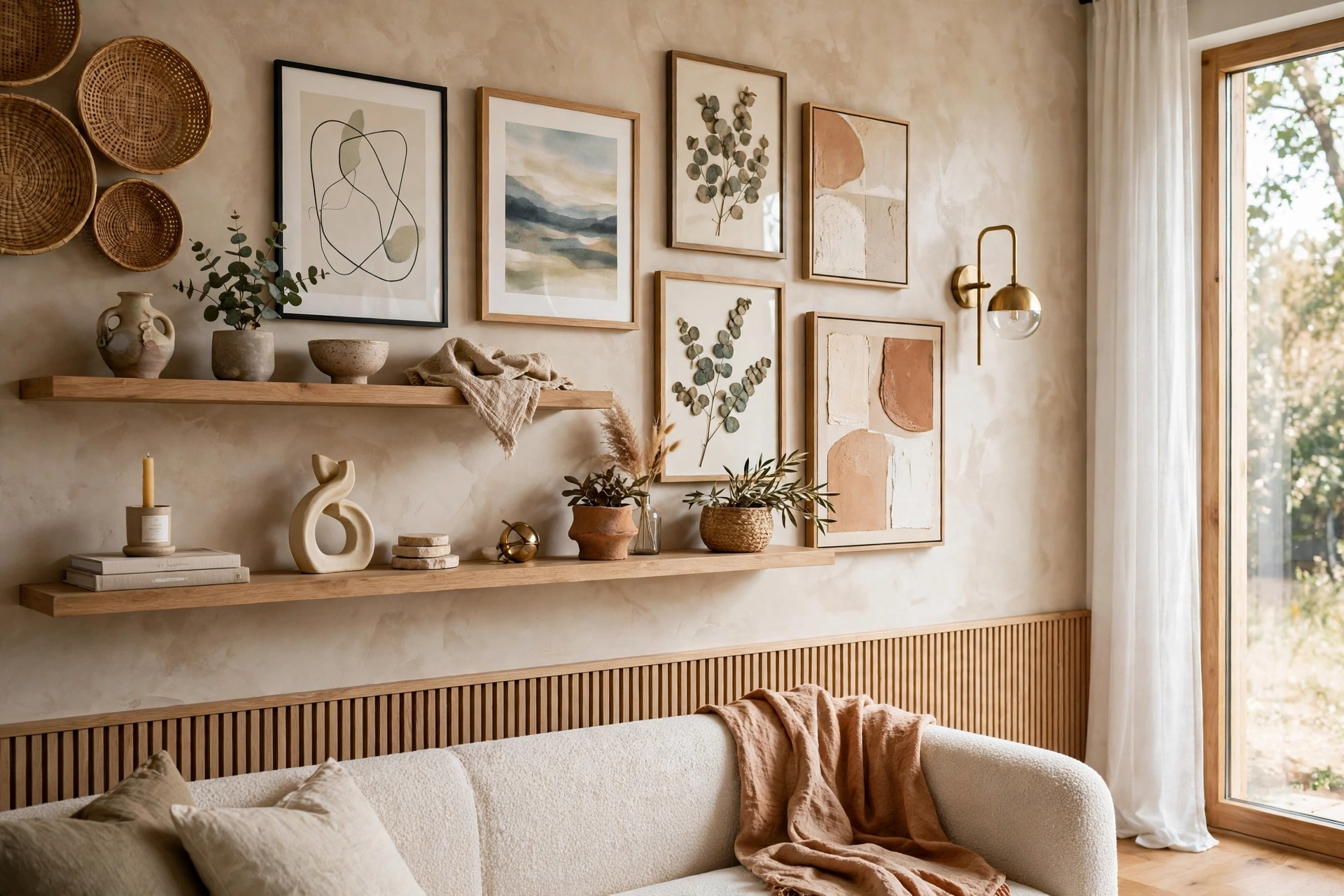
A gallery wall works when it feels collected over time rather than purchased in one afternoon. Mix photographs, prints, small paintings, and one or two three-dimensional objects such as a woven basket or a ceramic plate. Keep one element consistent, perhaps the frame colour or the spacing between pieces, so the variety feels intentional instead of random.
Lay the arrangement on the floor first and photograph it from above. That step saves you from a wall full of unnecessary nail holes. Keep the gaps between frames even, usually two to three inches, and start with the largest piece slightly off centre. A gallery wall does not need to be symmetrical to feel balanced, but it does need a clear shape, such as a loose rectangle or an organic cluster with a defined edge.
Oversized Art and Sculptural Pieces for a Bold Modern Look
One oversized canvas can do more for a modern room than a dozen small prints. Large art creates drama without adding visual noise, and it suits the clean lines of contemporary furniture. Abstract colour blocks, large-scale photography, and bold botanical prints all work well, especially when the colours pick up one or two tones already present in the room.
Sculptural wall decor adds a third dimension that flat art cannot. Metal wall sculptures, carved wooden panels, ceramic wall tiles, and layered paper art catch light and shadow as the day changes, so the wall never looks exactly the same twice. These pieces suit hallways and dining rooms particularly well, where people pass close enough to appreciate the texture.
Textured Wall Panels, Slats and Plaster for Quiet Depth
Not every wall needs something hung on it. Sometimes the wall itself is the decoration. Vertical wood slats in oak or walnut add warmth and rhythm to a modern room, and they also soften echoes in rooms with hard floors. Fluted panels behind a television or a bed create a focal point without a single picture frame.
Limewash and textured plaster finishes give walls a soft, cloudy depth that flat paint cannot match. They work beautifully in bedrooms and living rooms where you want calm rather than drama. If a full panelled wall feels like too much, try a single section, such as the wall behind a reading chair, and keep the rest of the room simple.
Mirrors as Wall Decoration That Brighten a Whole Room
A mirror is the hardest-working piece of wall decoration you can buy. It reflects light, makes a small room feel larger, and adds a reflective surface that balances soft fabrics and matte paint. Place a mirror opposite a window and it effectively doubles the daylight in the room. Place one in a dark hallway and the space immediately feels less like a corridor.
Choose a shape that suits the room. A round mirror softens a room full of straight lines. An arched mirror adds an architectural feel to a plain wall. A group of small mirrors in different sizes can become a gallery of its own. Avoid hanging a mirror where it reflects clutter, a blank ceiling, or the back of a television, because whatever it reflects becomes part of your decoration.
Living Walls and Hanging Plants for a Fresh Modern Feel
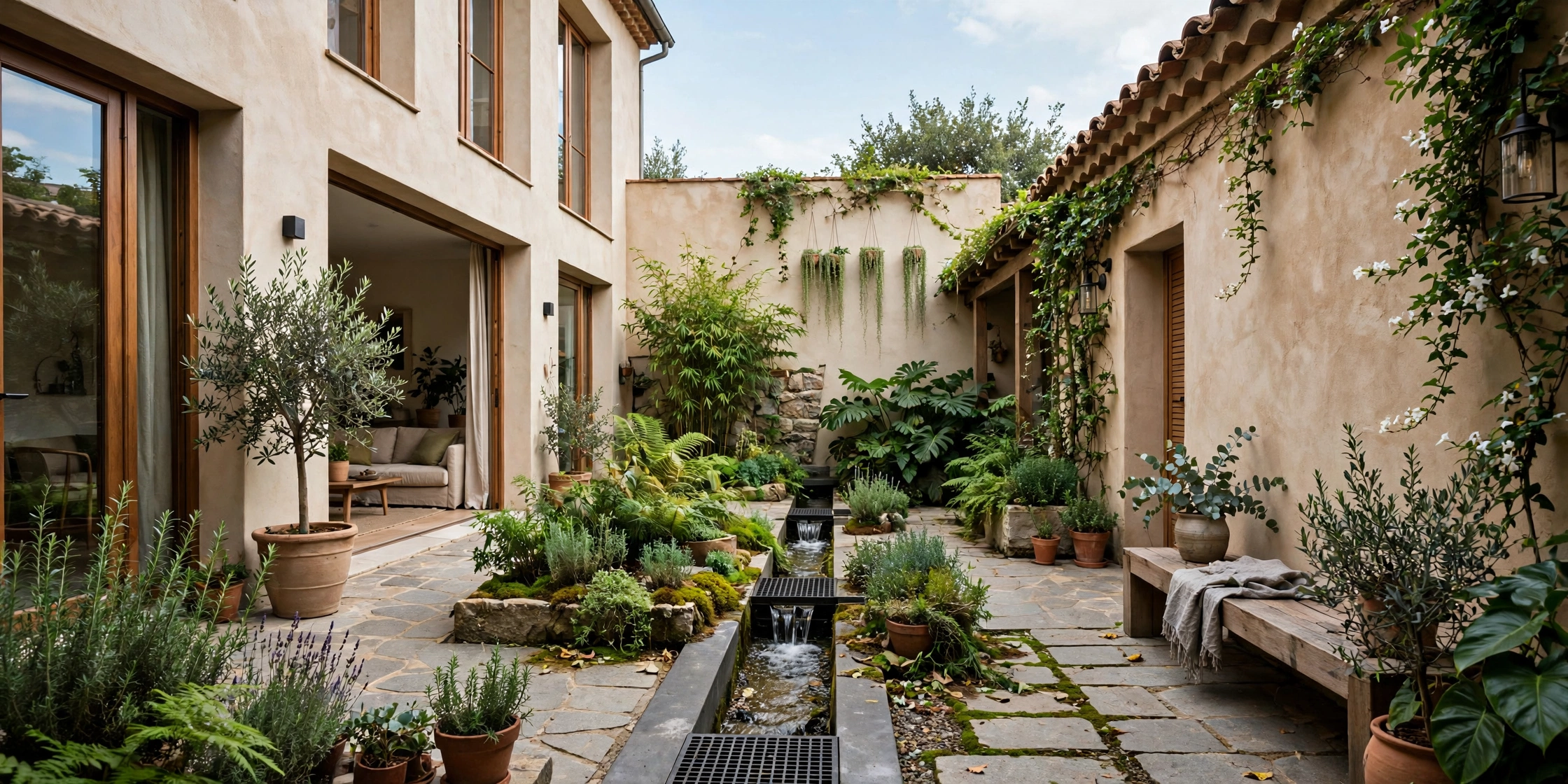
Plants bring life to a wall in a way that no print can. A living wall of trailing pothos, ferns, and small succulents turns a plain surface into something that changes with the seasons. Wall-mounted planters, hanging macrame holders, and slim vertical garden panels all work, even in small rooms, because they use vertical space that would otherwise go to waste.
Choose plants honestly. If a wall gets little natural light, pick low-light plants such as snake plants, pothos, and ZZ plants rather than sun-loving herbs that will struggle. Use planters with drainage or a waterproof liner so water never reaches the wall. A few healthy plants look far better than a crowded shelf of struggling ones, and they are much easier to maintain.
Shelves, Ledges and Display Walls With a Real Purpose
Floating shelves and picture ledges combine decoration with storage, which makes them ideal for modern homes. A picture ledge lets you lean art, photographs, and small objects against the wall and rearrange them whenever you like, without new holes. Floating shelves work best when they hold a mix of books, ceramics, and plants, with some empty space left between groups.
The mistake most people make with shelves is filling every inch. Leave about a third of each shelf empty so the objects you display can be seen. Group items in odd numbers, vary their heights, and repeat one colour or material across the shelves to tie the display together. In a home office, shelves can hold books and supplies; in a living room, they can hold the objects that tell your story.
Wallpaper, Murals and Paint Techniques as Wall Art
Wallpaper has returned as a serious design tool, and modern options are far easier to live with than the papers of twenty years ago. A single accent wall in a bold graphic pattern, a watercolour mural, or an oversized botanical print can carry an entire room. Peel-and-stick wallpaper makes the idea renter-friendly and easy to change when your taste moves on.
Paint can do the same job for less money. Colour blocking, where a large geometric shape is painted in a contrasting tone, creates a modern focal point without any art at all. A painted arch behind a bed, a half-wall of deep colour in a hallway, or a ceiling painted in a soft tone all count as wall decoration. Test a sample on the wall first, because paint looks different in daylight and lamplight.
Wall Decoration Slip-Ups That Make a Modern Room Look Cluttered
The most common wall decoration mistake is hanging pieces too high. Art hung near the ceiling disconnects from the furniture below it and makes the room feel unfinished. The centre of a piece should sit at eye level, and art above a sofa should sit six to eight inches above the back of the sofa, not a foot above it.
The second mistake is mixing too many styles on one wall. A gallery wall can mix frames and subjects, but it still needs a thread that holds it together, such as a consistent colour palette or a shared theme. The third mistake is buying decoration before deciding on the room’s colour story. When the wall decor, the rug, and the cushions all pull in different directions, no single piece can fix the room. Choose the palette first, then the decoration.
Never hang art so high that it floats away from the furniture beneath it.
Avoid filling every wall. Empty wall space is what makes the decorated walls stand out.
Do not buy a full set of matching decor in one trip. A home that looks collected feels more personal than a home that looks purchased.
Final Thoughts: A Modern Wall That Feels Like Yours
Creative wall decoration is not about following a trend or filling every blank surface. It is about choosing one strong focal point, adding texture and life around it, and leaving enough empty space for the room to breathe. Start with the wall you see first, pick a piece you genuinely like, and build slowly from there. A wall that reflects the people who live with it will always look more modern and more interesting than a wall that simply copies a catalogue.
Wall Decoration FAQs for a Modern Home
How do I choose the right size of wall art for my room?
Measure the furniture beneath the art and aim for a piece about two-thirds as wide as that furniture. A small picture above a wide sofa looks lost, while an oversized piece above a narrow console crowds the wall. When in doubt, go slightly larger rather than smaller, because a confident piece reads as intentional.
What is the best height to hang wall decoration?
Hang the centre of the piece at eye level, roughly 57 to 60 inches from the floor. Art above a sofa or a bed should sit six to eight inches above the furniture. In a hallway, keep the centre at the same eye-level height so the display feels consistent as you walk past it.
Can I mix different frame styles in a gallery wall?
Yes, as long as one element stays consistent. Keep the frame colour the same while varying sizes, or keep the mat colour the same while varying frame styles. A shared colour or a shared theme, such as black-and-white photography, is what stops a mixed gallery from looking random.
Is wallpaper a good idea for a modern home?
Wallpaper works well when it is used on one accent wall rather than every wall in a room. Bold patterns, murals, and textured papers add personality that paint alone cannot. Peel-and-stick wallpaper is a good option for renters or for anyone who likes to change a room every few years.
How do I decorate a wall without making the room look cluttered?
Choose one focal point per wall and leave empty space around it. Limit the number of small objects on shelves, group items in odd numbers, and keep a consistent colour palette. If a wall feels busy, remove one piece at a time until the room feels calm again.
What wall decoration works best in a small room?
Mirrors, slim floating shelves, and one large piece of art work better than many small pieces in a small room. Light colours, reflective surfaces, and vertical arrangements draw the eye upward and make the space feel taller. Avoid heavy, dark frames that shrink the wall visually.